
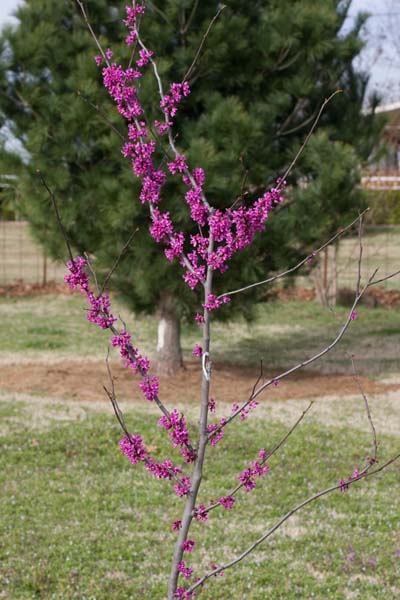
 The eastern redbud, Cercis canadensis, is badly named, common as well as Latin. It is certainly eastern, found native in the south-eastern quarter of the United States, yet canadensis refers to Canada, where this small tree is not even remotely native, or even viable. I haven’t a clue as to why this small tree has been so named. My wife jokes that a man must have given it its common name, since the buds are hardly red. Regardless what you call it, this time of year the eastern redbud is a stunning little tree. Being the state tree of Oklahoma, you will find it planted just about everywhere in the Sooner state, except out in far-western Oklahoma, where there is not enough rainfall. The specimen shown here is Cercis canadensis ssp. texensis ‘Oklahoma,’ and is one of the newest additions to our little “park.” Boasting a deeper pink/purple bloom than seedling redbuds, ‘Oklahoma’ is showing up more and more in landscapes, for obvious reasons.
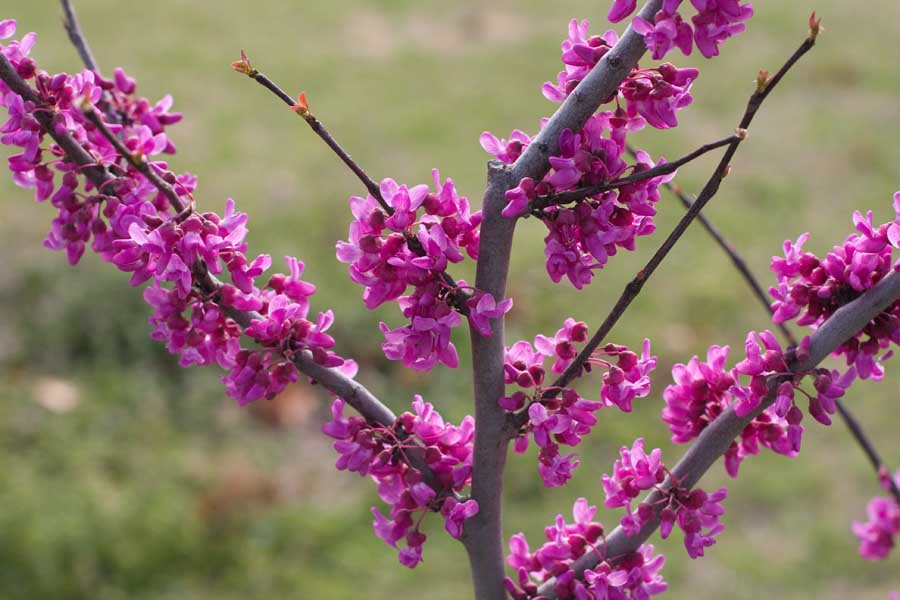 Taxonomically, the eastern redbud is a legume, making it more closely related to the green bean and peanut than to the oaks or maples. The family tie can be seen in that the seed pods, when still green resemble miniature snow peas. The flower buds of the eastern redbud, unlike any other plant I can think of, are borne in clusters on older wood all up and down a stem. This feature makes even our little specimen quite showy. My wife took these pictures a little over a week ago, but this redbud, and all the others around are still in full swing. Later, when the blossoms fade and seed pods begin to form, large heart-shaped leaves will emerge, dark green and polished. If you don’t have one of these in your landscape, you either live in an apartment, or you’re not an Oklahoman.
If you live in these climes, it’s time to be thinking about getting a garden started. Get outside this weekend and enjoy God’s handiwork, and have a great Lord’s Day.
 verything I have been reading or listening to this past winter seems to have references to Saint Augustine’s The City of God. It is something I have wanted to read for some time, so I have decided to read it this year. I do mean this year, because
 33. Why is He called God’s only begotten Son, since we also are the children of God?
 Sometimes it’s the little things, the small details that brings me such joy in the spring landscape. Sure, the grand sweep of a bank of pink azaleas under a grove of loblolly pine is stunning, but you have to stand back far away to take it all in. In those scenes, sometimes I feel a bit detached from it all, because to get closer is to loose the beauty. The parts of the landscape I like the best are those elements that are best appreciated on your hands and knees.
 anatic: Anybody who loves Jesus more than you do.
 This week we are weaning ourselves back to just two plants in bloom for our Friday Floral post: one shrub and one spring bulb. If you could only walk around the yard and see what isn’t being covered by this extraordinary restraint, it would make you weep. Maybe some of it will still be in bloom in future weeks. Let’s hope so. These photos were taken by my wife throughout this week. Enjoy.
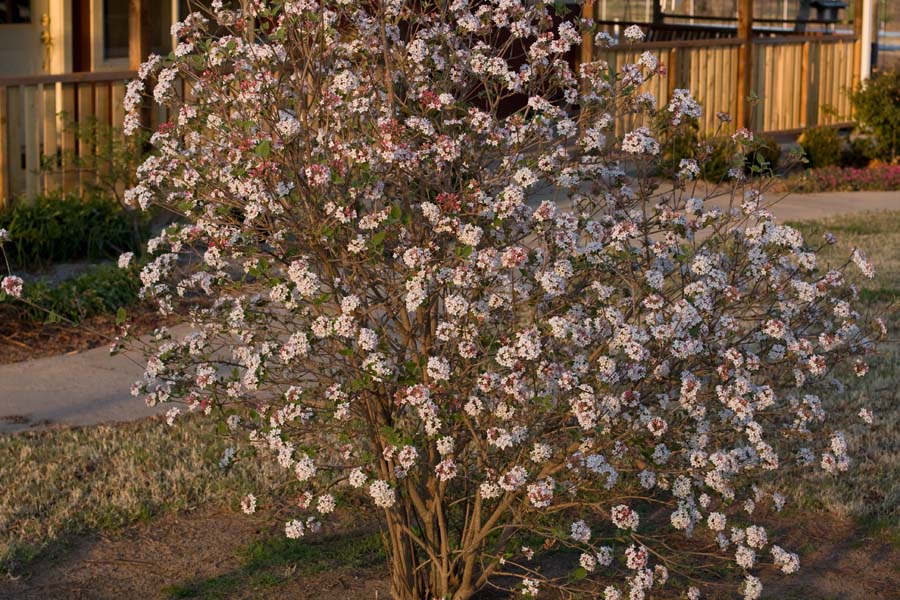
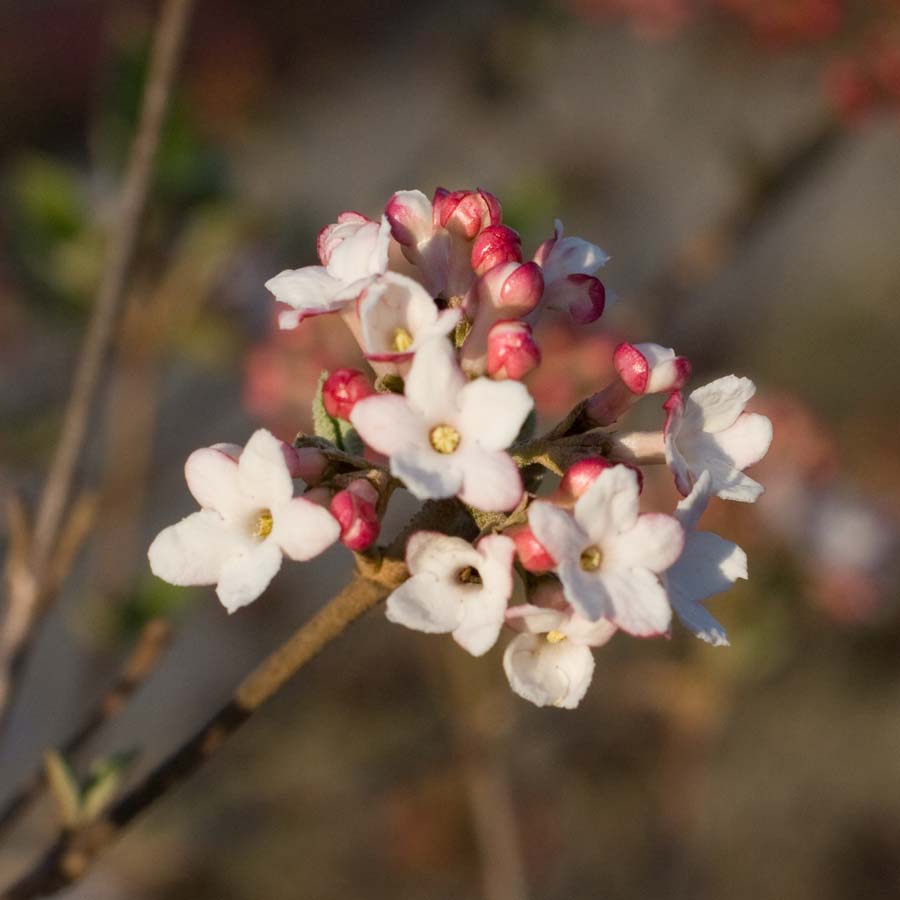 The genus Viburnum represents a class of shrubs that has dozens, possibly hundreds of cultivars, and yet they are virtually unknown in the home landscape. So many plant materials are snubbed because they are not evergreen, despite the fact that the sameness of evergreens can sometimes translate into “boring.” This is something we have tried to avoid, using evergreens—mostly holly, and boxwood—mainly as hedge material on our property borders. On the other hand, so many deciduous shrubs have their week of glory, and then blend into a different kind of “boring” for the rest of summer. And they are leafless all winter long, to boot. I can understand that too. And that is the very reason we love the four different Viburnum in our landscape. They have more to offer than a short-lived pretty face in spring. Beginning in winter the tidy, mid-sized shrubs are indeed leafless, but with steel-gray stems forming interesting patterns against the brown turf and blue sky. (Don’t even think about snow. I won’t allow it.) In late winter pointed scale-patterned buds stud the terminals of each branch. In early pre-spring those buds swell and take on a rich pink hue. Mid March heralds true spring with what you see here: the palest of pink blossoms covering the entire shrub. But what your senses cannot gather in from this page is the sweet smell that blankets our entire front yard. It is indescribable. This specimen is Viburnum ‘Korean Spice’ which is a hybrid of two other Viburnum species. After the big show in spring, Viburnum sports semi-leathery leaves, each species and cultivar with its own distinctive leaf pattern, veining, and hue. The flowers produce red berries, again each kind having its own shade of red, with some species sporting almost black berries. The birds devour the berries once they are ripe, so this part of the show doesn’t last all summer. Their combination of size and hardiness makes Viburnum perfect for the low-maintenance home landscape.
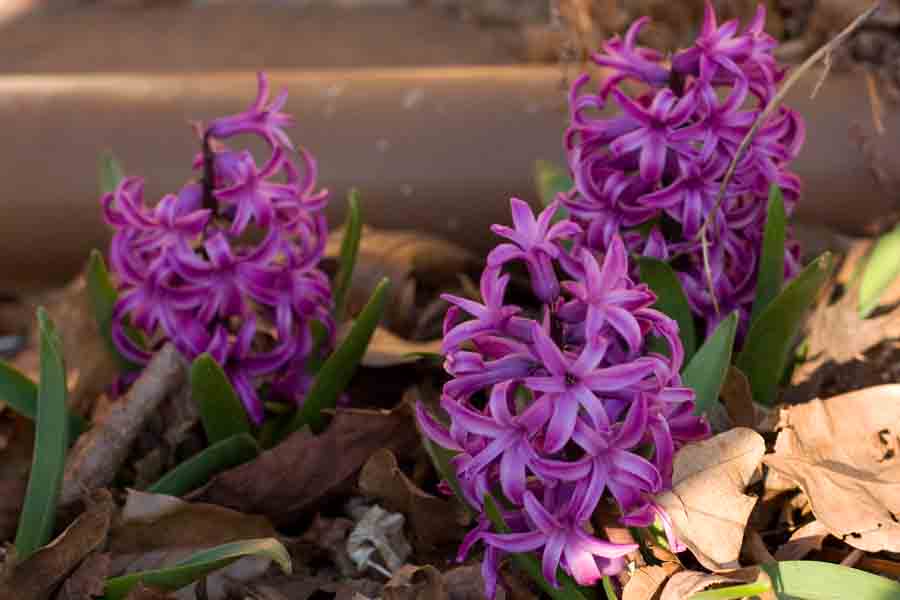 My wife loves hyacinths. Though the waxy flower spikes only last a few days, and the bulbs eventually have to be replanted every so often, they are well worth the minimal effort. They come in many colors, and all are fragrant. I like them too.
 In the oddest of places, a hymn book, quite by accident I stumbled across this little bit a few days ago:
 This week’s FFP reminds me of that one-sided phone conversation often found placarded near the desks of shipping-and-receiving clerks:
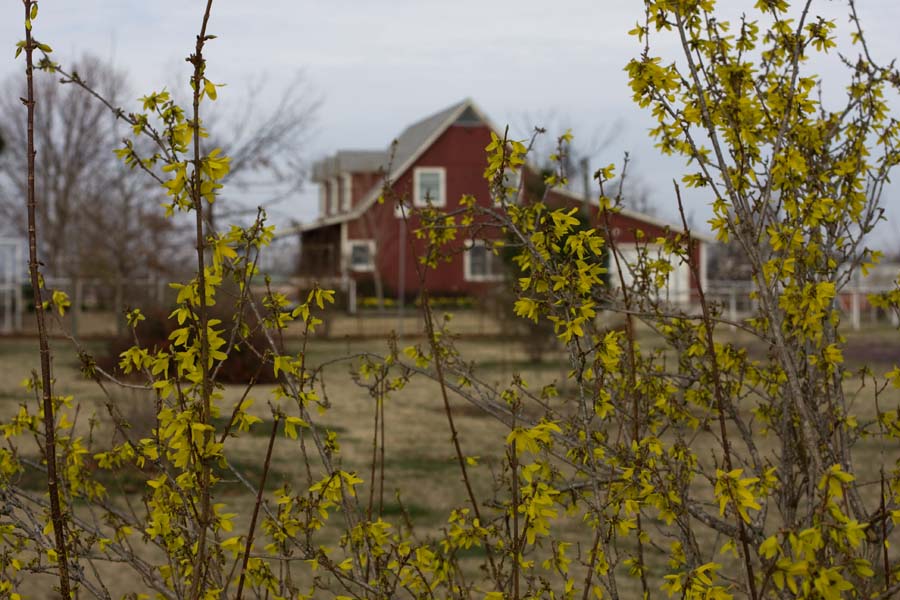 The genus Forsythia was named after the Scottish botanist William Forsyth (1737-1804) who first brought the plant from China to England. I am not sure of the species of this particular plant, for there are many hybrids and cultivars around. This one appears to be an improved variety of some sort, as the blooms are a bit lighter yellow than most you see around old abandoned homesteads. My wife especially favors this light canary-yellow forsythia over the more common ones bearing near-orange yellow blossoms. She took this shot, framing our house in the back ground between the branches, which some describe as “leggy,” and others, more kind, “open.” You can’t force it to thicken up, so it’s best to keep pruning to a minimum, and only in the spring right after the blossoms fade. After this show in spring it’s just another deciduous shrub, so place it where it will “fade” into the general landscape.
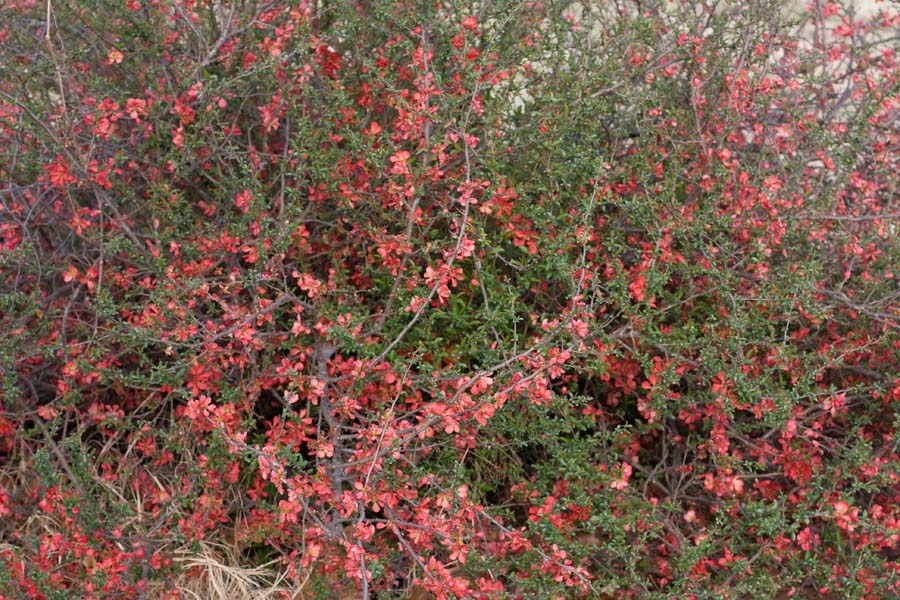 Flowering quince, another old-fashioned shrub, is generally found where forsythia is found. It too has little to offer after the spring show, so don’t make it the centerpiece of your landscape. The old timers often mistakenly called it japonica after the species of its Latin name, Chaenomeles japonica. The red blossoms of the quince resemble apple blossoms, of which they are related, and a few of the blooms do turn into odd little misshapen “apples.” There is a quince of some near relation whose fruit is used to make jellies and preserves, but I’ve never seen one. This shot was also taken by my wife.
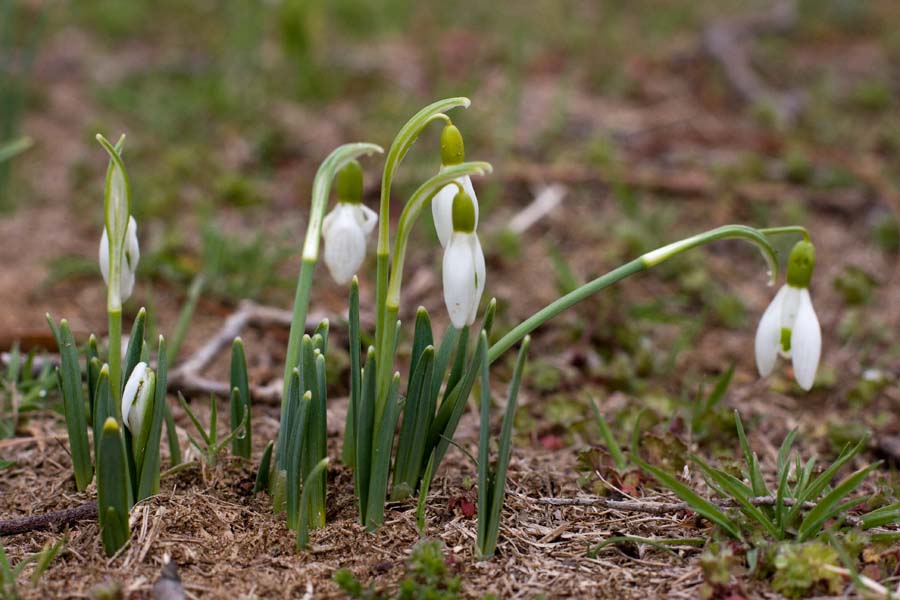 These last little dainties are snowdrops, Galanthus nivalis. One of the lesser spring bulbs, it is best viewed with your face to the ground turned sideways, as the pure white blooms droop down from stalks barely three inches tall. The little ring of bulbs we planted some years ago around a Chinese dogwood seem to be prospering, but I fancy our summer climate is a bit extreme. I have never seen snowdrops elsewhere, but the catalog photos show them to be a bit larger than these. This shot is mine, for alas, my dear wife’s shot was from an “aerial” vantage point.