Missing the Mark? I Don’t Think So.

shortnsweet02My pastor has been using Respectable Sins, by Jerry Bridges, as a guide to a series of Wednesday-evening devotional messages. I decided to pick up a copy of the book, and have found it very helpful. Here is an early example. More to follow at a later date.

“In Greek culture, sin originally meant to “miss the mark,” that is, to miss the center of the target. Therefore sin was considered a miscalculation or failure to achieve. . . . Usually, however, our sinful actions stem not from a failure to achieve but from an inner urge to fulfill our own desires. As James wrote, “Each person is tempted when he is lured and enticed by his own desire” (1:14). We gossip or lust because of the sinful pleasure we get out of it. At that time, the lure of that momentary pleasure is stronger than our desire to please God.”

Jerry Bridges, Respectable Sins (Colorado Springs: NavPress, 2007), p. 21.

Posted in Short N Sweet | Tagged , , , | Comments Off on Missing the Mark? I Don’t Think So.

Earthly Gifts, Happiness, and Eternity

Oh, there is so much here. The more I read this short bit from St. Augustine, the more I saw; about earthly happiness, the nature of the kingdom of God, the relationship between the Old and New Testaments, and on it goes. Hebrews 11:13-16 comes readily to mind.

And therefore earthly kingdoms are given by Him both to the good and the bad; lest His worshippers, still under the conduct of a very weak mind, should covet these gifts from Him as some great things. And this is the mystery of the Old Testament, in which the New was hidden, that there even earthly gifts are promised: those who were spiritual understanding even then, although not yet openly declaring, both the eternity which was symbolized by these earthly things, and in what gifts of God true felicity could be found.
Saint Augustine, The City of God, Dods translation, book 4, chapter 33.

Posted in de civitas dei | Comments Off on Earthly Gifts, Happiness, and Eternity

Lord’s Day 24

(Second Part: Of Man’s Redemption—Questions 12-85)

62. But why cannot our good works be the whole or part of our righteousness before God?

  • Because the righteousness which can stand before the judgment-seat of God must be perfect throughout and wholly conformable to the divine law; whereas even our best works in this life are all imperfect and defiled with sin.

63. How is it that our good works merit nothing, while yet it is God’s will to reward them in this life and in that which is to come?

  • The reward comes not of merit, but of grace.

64. But does not this doctrine make men careless and profane?

  • No, for it is impossible that those who are implanted into Christ by true faith, should not bring forth fruits of thankfulness.

Posted in Heidelberg | Comments Off on Lord’s Day 24

Complete and Incomplete

Of that grouping of plants known as monoecious, there is a further division into two sub-groups: complete and  incomplete, which refers to the nature of a plant’s reproductive parts; what we commonly call flowers. One each of these two sub-group is represented in this weeks floral pics. A botanical term invented in the 18th century, the word “monoecious” means, literally (from the Greek) “one house.” In other words, the plant’s reproductive parts, both male and female, are present on a single plant. The other grouping is known by the term dioecious, which of course means “two houses.” Plants in this grouping have male and female plants. Ginkgo and green ash fall into this grouping, and you are well advised to heed the warning to purchase only male trees of such plants. Stinking fruit in the case of the first, and pesky seed in the case of the second make this need-to-know info.

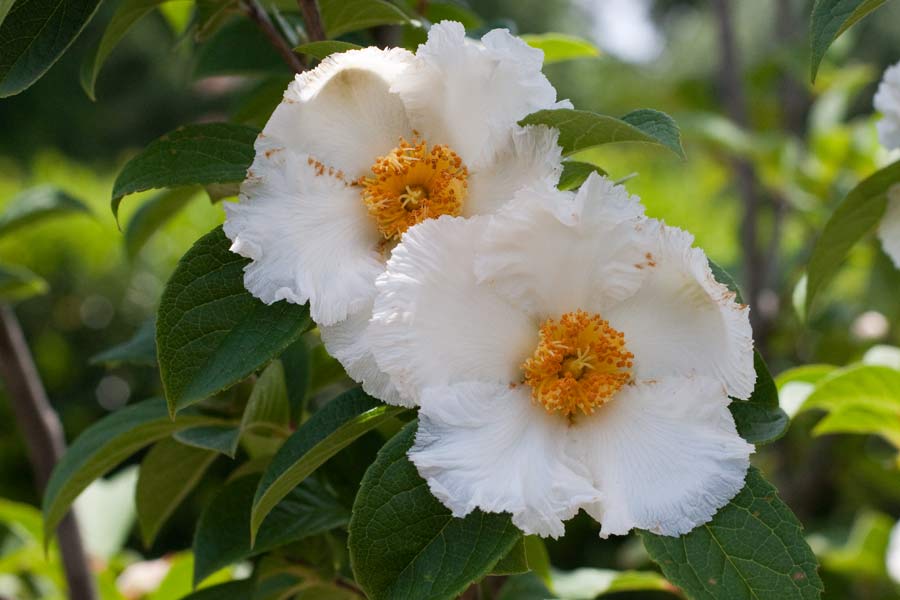
Complete: First our representation of a complete flower, what most readily recognize as a blossom.

The joy of spring in the landscape for my wife and I peaks at the blooming of our Korean stewartia, Stewartia koreana. Grace and delicacy in the landscape is measured by this genus of small to medium trees. We had originally sought the Japanese stewartia, Stewartia pseudocamellia, but came up empty handed. We finally found the Korean stewartia and settled on it. The only noticeable difference is that the Korean species only grows to about twenty feet, while the Japanese species might reach almost twice that height, given optimum growing conditions.

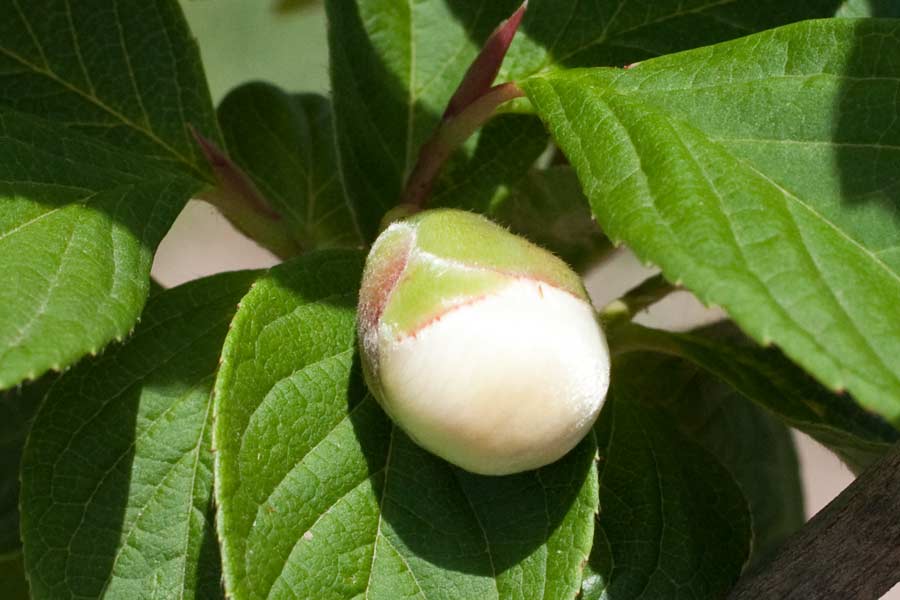
The fully open blossom is beautiful enough, but the anticipatory bud, swelling to the size of a grape before bursting open, also creates a marvelous tease. All of the Stewartias require moist, well-drained soil. Our soil is well drained, but moisture is supplied by a water hose after the spring rains cease. A thick mulch of some sort helps as well. Smooth, tan bark that exfoliates in irregular patches along the main trunk and larger branches, and those lovely camellia-like blossoms are what make the Korean stewartia a favorite this time of year. The genus Stewartia is in fact closely related to the genus Camellia, which the blossoms readily betray. The tea plant is of the genus  Camellia as well.

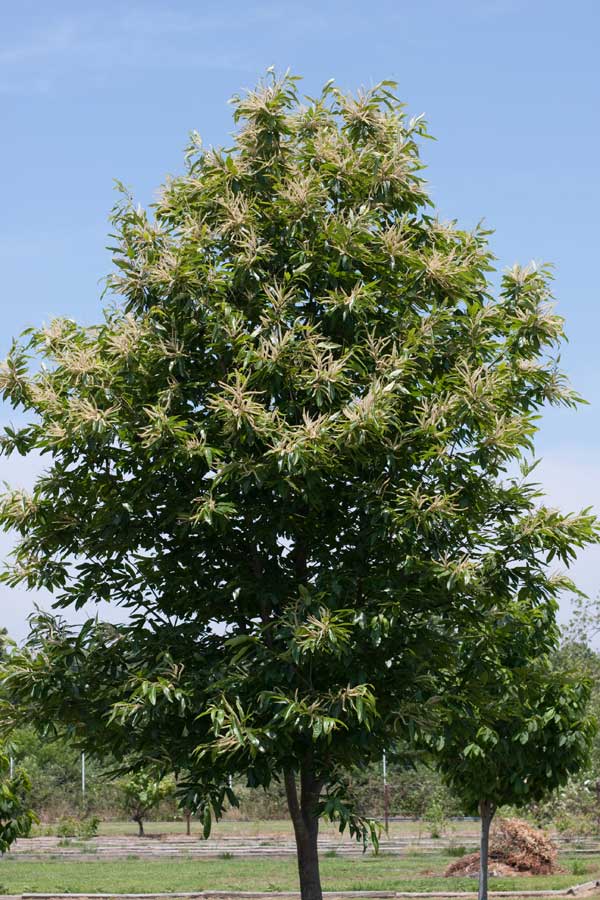
Incomplete: This is not your typical blossom, but blossoms they are; male and female separate on the same tree.

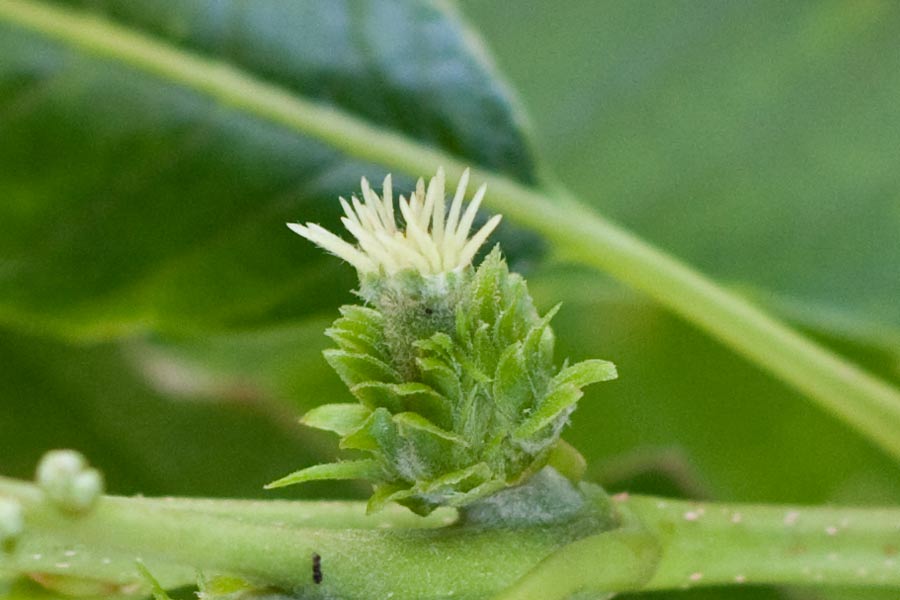
The chestnuts in the back yard are going to produce a bumper crop this year, God willing. This is one of three, a Chinese chestnut, Castanea mollissima. Of the various nut trees, chestnut makes the best show at blossom. Oaks and pecans catkins droop down and soon fall off, while those of the chestnuts are presented more upright and seem to last longer. There is a good deal of history surrounding the chestnut and the eastern U. S. Everyone is familiar with the various paintings of barns and blacksmiths plying their trade under the spreading chestnut tree. There is also the issue of chestnut blight a century ago, which wiped out the American chestnut, and nearly wiped out the lumber trade in that reigon, but that is a post for someone else to write. We also have two American chestnut hybrids, which are some combination of Castanea dentata,  and the Oriental and European species.

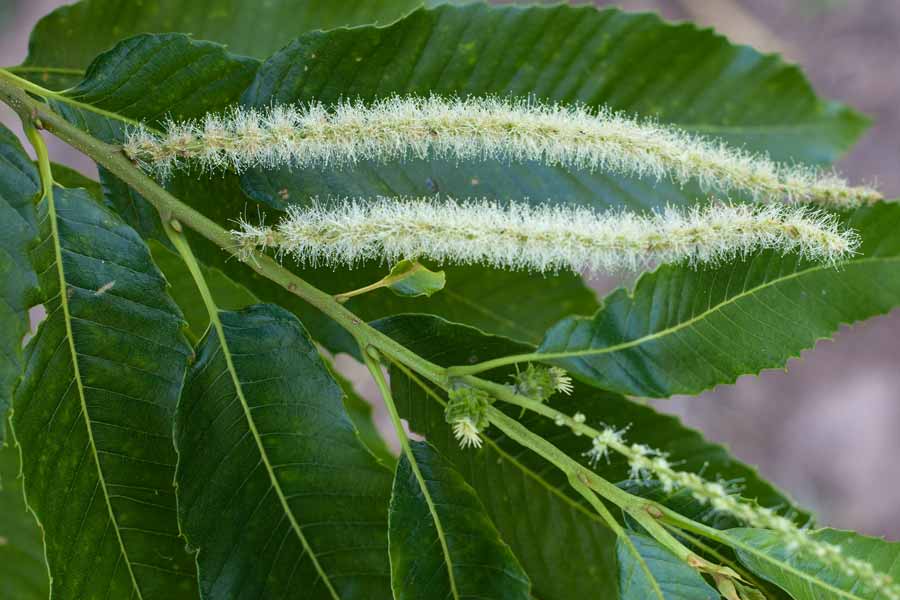
I thought I would show a couple of pics of their blossoms close up. The male blossom, called a catkin, are the long fuzzy parts in this photo. They produce the pollen which pollinates the female embryo—there are two of them, much less conspicuous farther down and to the right along the branch. The photo below is a close-up of the nut-to-be. It almost looks like a pineapple. In a few weeks the spines will begin to emerge all around the growing nuts. There will develope two half-sphered nuts flat against one another, growing inside a spike-o-rama deluxe. When they fall to the ground in the autumn, you better hope the spiny shell splits open to release the seeds inside, because they are sharp.

Have a great week end and a blessed Lord’s day.

Posted in Friday Floral | Comments Off on Complete and Incomplete

Lord’s Day 23

(Second Part: Of Man’s Redemption—Questions 12-85)

59. But what does it help thee now, that thou believest all this?

  • That I am righteous in Christ before God, and an heir of eternal life.

60. How art thou righteous before God?

  • Only by true faith in Jesus Christ. That is: although my conscience accuse me, that I have grievously sinned against all the commandments of God, and have never kept any of them, and that I am still prone always to all evil, yet God, without any merit of mine, of mere grace, grants and imputes to me the perfect satisfaction, righteousness and holiness of Christ, as if I had never committed nor had any sin, and had myself accomplished all the obedience which Christ has fulfilled for me, if only I accept such benefit with a believing heart.

61. Why sayest thou, that thou art righteous only by faith?

  • Not that I am acceptable to God on account of the worthiness of my faith; but because only the satisfaction, righteousness and holiness of Christ is my righteousness before God, and I can receive the same and make it my own in no other way than by faith only.

Posted in Heidelberg | Comments Off on Lord’s Day 23

Big Bloom

(Click on each of the thumbnails to get a larger picture.)

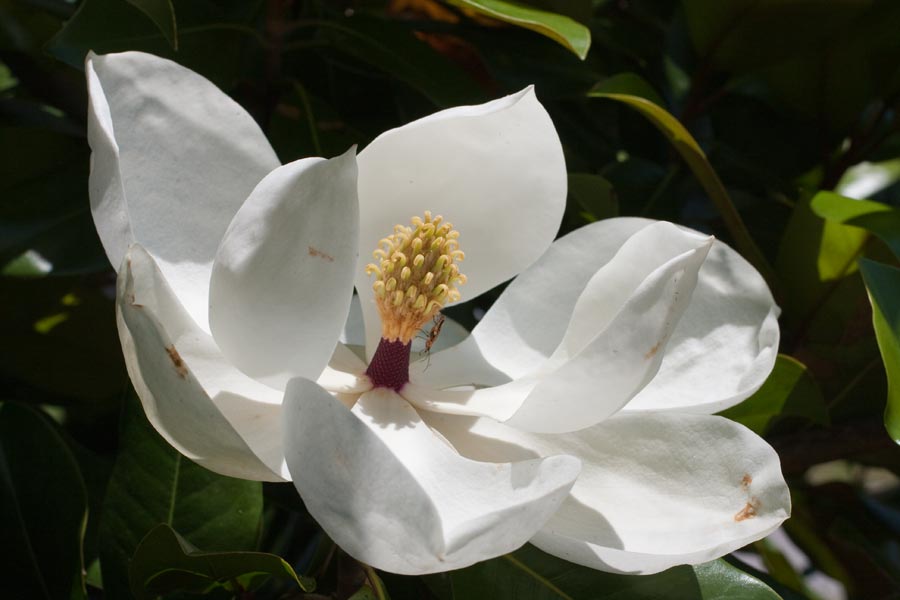
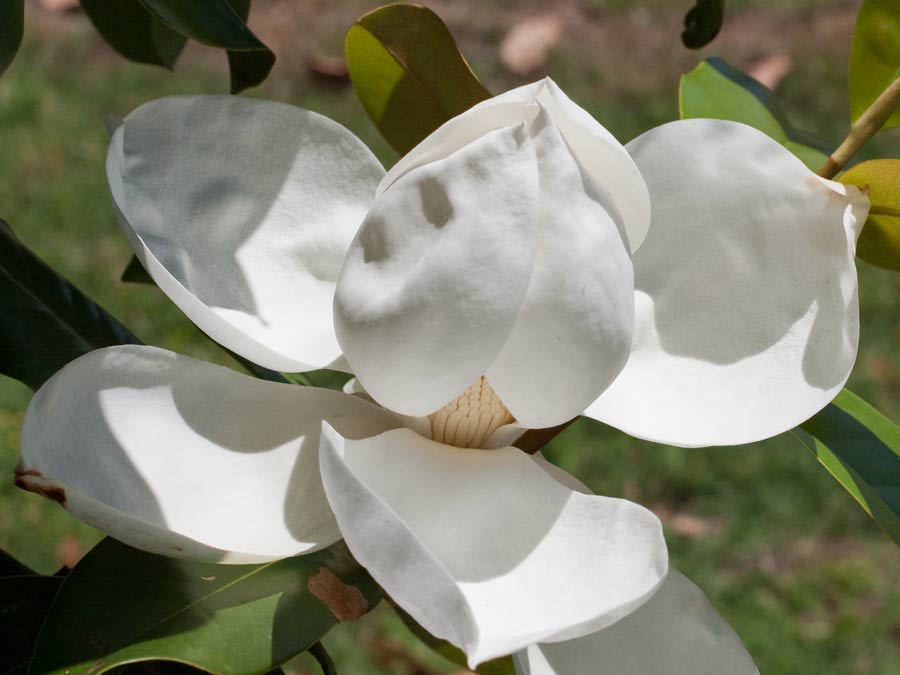
That’s what the species name means: Magnolia grandiflora has one big bloom. Well, it has more than one. The “one” was used for emphasis. Southern magnolia, or bull bay, has the biggest blossoms of any tree I can think of. I haven’t been everywhere, so I better not say “biggest” just yet, because there could be something out there I am not aware of. Let’s just say BIG, and leave it at that. Whether it is the biggest blossom sported by any species of tree is not important. What is important is that Southern magnolia says The South. A Southern Magnolia makes you think of Gone with the Wind, Colonel Sanders, and mint juleps.

Native along the eastern coastal plains from South Carolina to the tip of east Texas, this giant gem has adapted well farther north; much farther. The blossoms aren’t the only thing that is big. The leaves, dark glossy-green, with fuzzy brown undersides, are as big as your hand. Slow growing, a Southern magnolia will eventually reach sixty or more feet tall, with a spread of fifty or more feet wide. Oh, and did I mention, southern magnolia is evergreen, even though the leaves burn and tatter a bit here in northeastern Oklahoma. Spring fixes that with a fresh set to replace the old ones. Southern magnolia provides a dense shade, and its lower limbs can be left to grow all the way to the ground, or trimmed up so you can sit under them on a hot summer day. It looks good either way, although my wife prefers the to-the-ground look, which is fine with me.

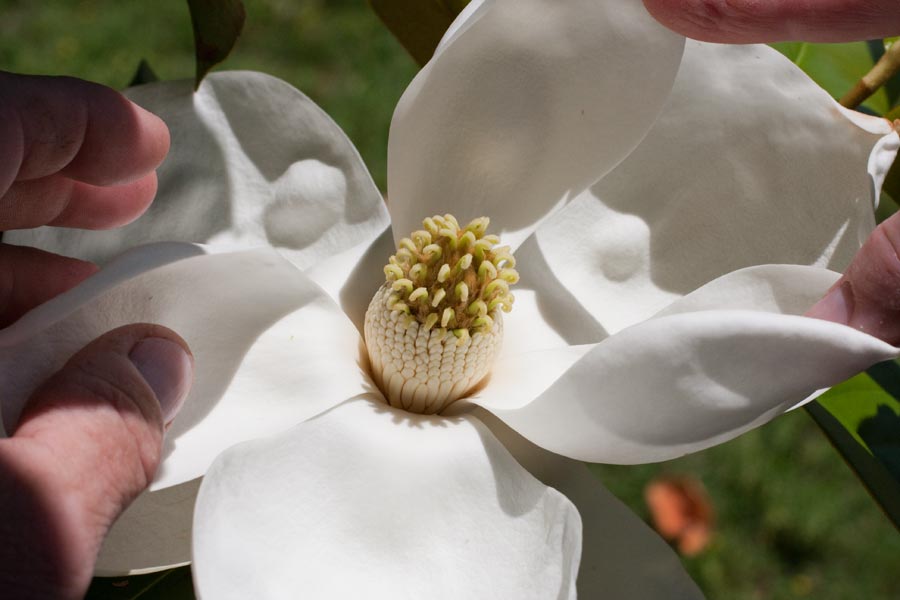
The blooms, as you can see, are pure velvety-white, and as big as a dinner plate. What you can’t see is the sweet fragrance. It is not overpowering, just pleasant. My wife took these shots. I couldn’t decide on just one, as there wasn’t a bloom “just right.” The third shot, although pretty enough from a distance, lacks many of the stamen, the male reproductive parts that hold the pollen. In a day the petals too will fall, and the little seed “grenade” will begin to form. The second blossom, although nearly fully open, conceals the center parts. The last shot I guess I took, as those are my wife’s pretty fingers on the right helping mine on the left to peek behind the curtain.

Southern magnolia does not boast a spectacular display of blossoms, lasting for only a couple of weeks. They come instead a few at a time each day, each lasting a few days, for several weeks in late spring and early summer. The “grenades” persist for the rest of summer, with the slick, red seeds peeking from its crevices toward the middle of summer. If you have the space for it in your landscape, Southern magnolia will make you feel like a southern gentlemen (or a southern belle).

Have a good weekend. See you in the Lord’s house on Sunday.

Posted in Friday Floral | Comments Off on Big Bloom

Lord’s Day 22

(Second Part: Of Man’s Redemption—Questions 12-85)

57. What comfort does the Resurrection of the Body afford thee?

  • That not only my soul, after this life, shall be immediately taken up to Christ its Head; but also that this my body, raised by the power of Christ, shall again be united with my soul, and made like unto the glorious body of Christ.

58. What comfort hast thou from the article of the Life Everlasting?

  • That, inasmuch as I now feel in my heart the beginning of eternal joy, I shall after this life possess complete bliss, such as eye hath not seen, nor ear heard, neither hath entered into the heart of man; therein to praise God for ever.

Posted in Heidelberg | Comments Off on Lord’s Day 22

Landscape Height

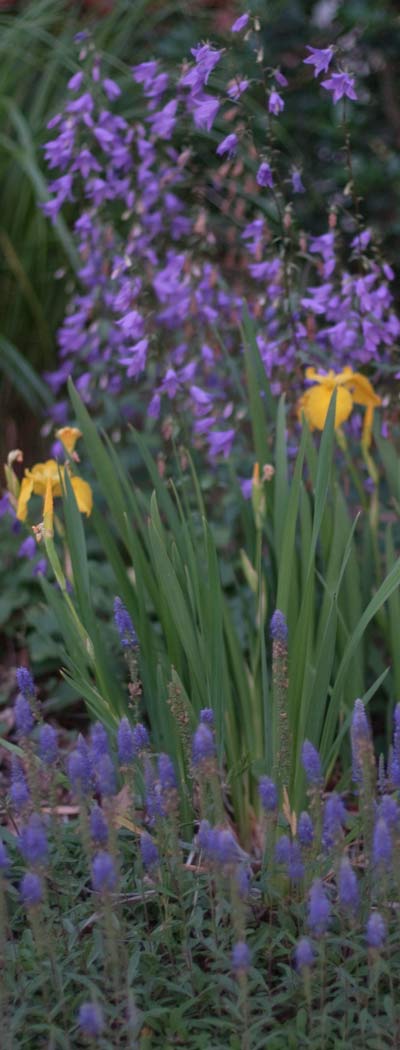
Here are some pics I took late yesterday evening. They are all tall and skinny, except for one. This time of the spring ladybells, Adenophora lilifolia, plays the leading roll in the border landscape. It adds height to the landscape, and creates a stunning backdrop for the shorter players. It is also known as deer’s foot, because of its leaf pattern. Ladybells is a near relative of the genus Campanula, but is far better suited to hot, humid summers than its northern cousins. It is a bit of a runner, so moderate caution should be exercised.
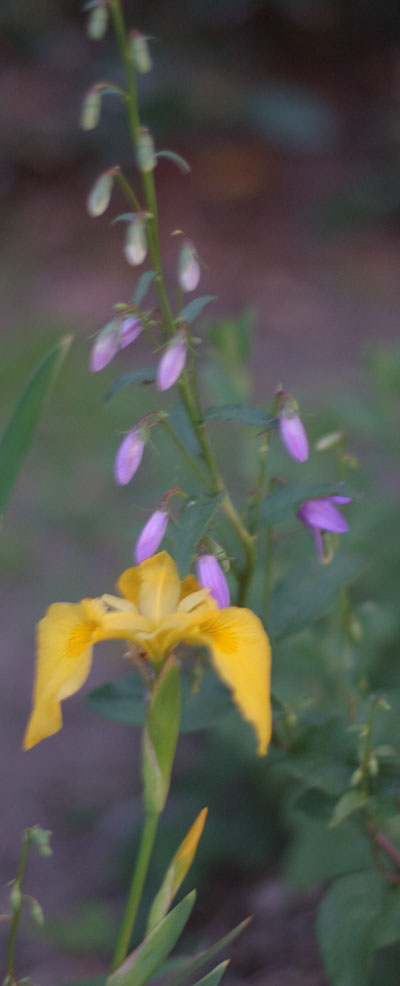
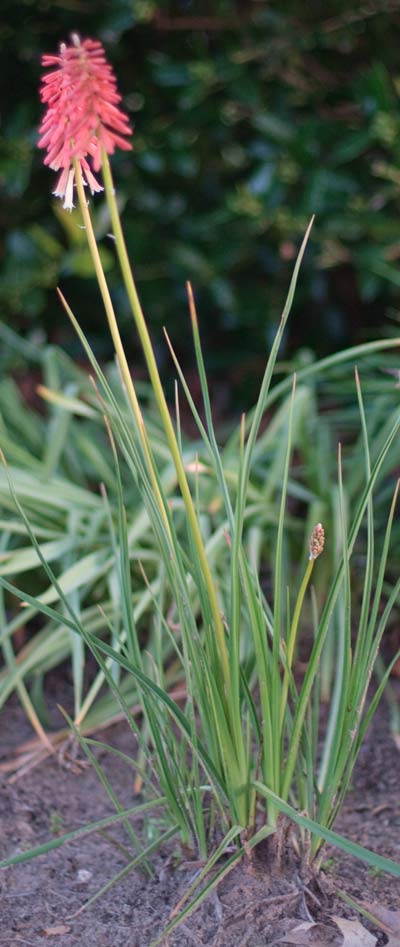
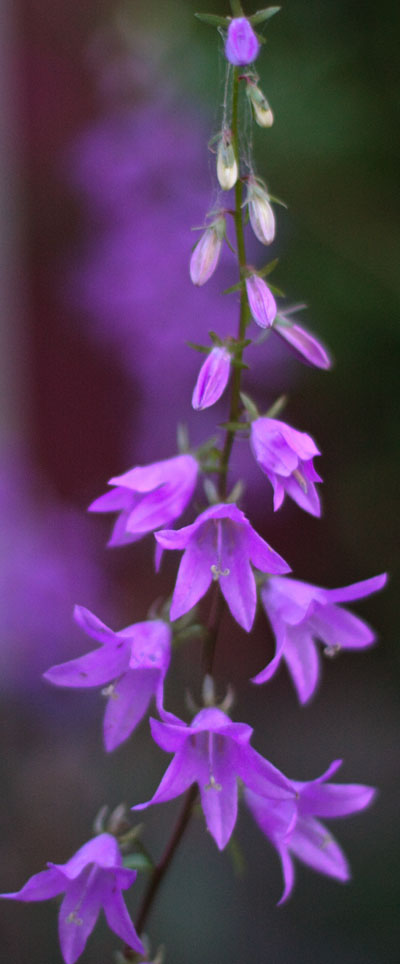
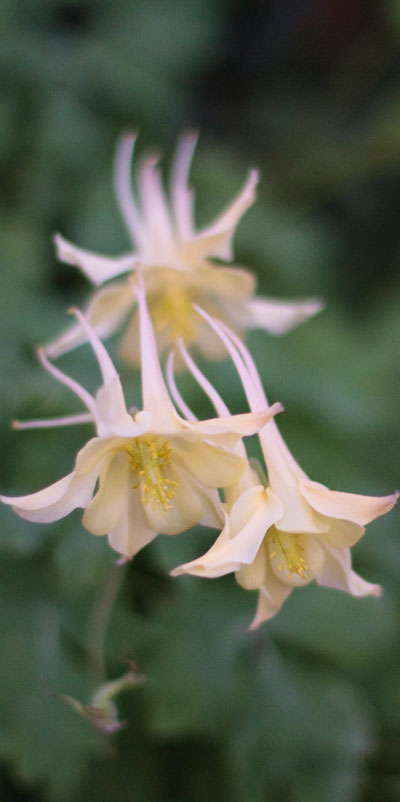
Other players include yellow iris (of some sort), red hot poker, Veronica spicata, and columbine. Click each image to enlarge it. Enjoy.

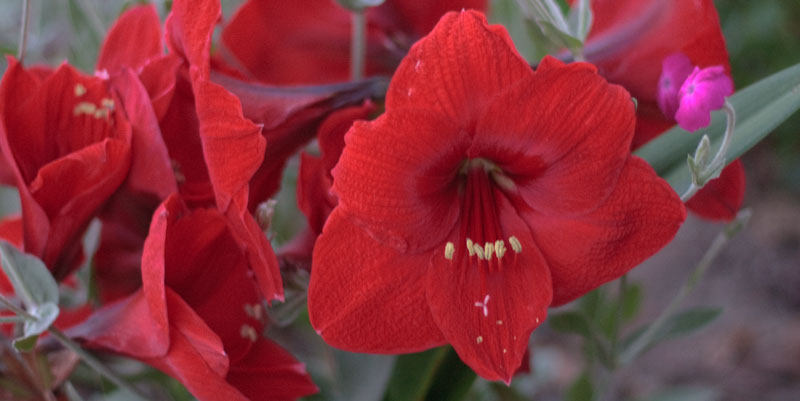
The amaryllis is from our eldest daughter, who after enjoying the blossoms indoors one Christmas, many years ago—her college days—gave it to us the following spring, and on a whim, we planted it outside. It lived! Oddly enough, we purchased a supposedly “hardy” outdoor amaryllis, which lasted only a few years. The two pinkish interlopers on the right, and the greyish foliage peeking in here and there is rose campion, Lychnis coronaria, a biennial. It comes up here one year, there the next. This year a plant came up near and around the amaryllis. Spread by seed, it is not very hard to keep in bounds. The seed was given to us some years back by a dear old friend from Texas.

Things are starting to happen out in the vegetable garden, so have a fruitful weekend, and a blessed Lord’s day.

Posted in Friday Floral | Comments Off on Landscape Height

Glory to God

The very solution I was getting at in my previous post. Would that more among us would see what the young author of this post sees, and Spurgeon saw. Would that our church music reflected the passion therein expressed.

Posted in Christianity | Comments Off on Glory to God

Musical Reformation

Musical reform is something I wish were somewhere in the fabric of the SBC program currently on the front burner. Sadly, it is not. I will be surprised if music as an issue is mentioned once this year in Louisville.

I say program because that is just what it is. It is well intentioned, to be sure, proposed by good men, to be sure. It is, however, merely a program, set with all of its little cures. Each item under each Roman numeral is just another attempt to solve the little problems that are merely symptoms of the one big problem. Dr. Akin, in his now-famous address touched on the problem numerous times, but only as items under the Roman numerals. It pleased me a great deal at the time I first listened to it via podcast, and later read the transcript. Then when I read the drafted statement that everybody is mad about signing (or condemning), I realized the whole thing is just another well-intentioned program, another symptom solver.

The glory of God, showing him large, should have been the over-arching theme. Instead, as the program’s title betrays, it’s all about numbers. After all, that is what Great Commission Resurgence really means. Our problem is that our numbers are dwindling. We are in decline. We need to beef up our evangelism. By the way, that is what is what it is all about. That is what the SBC was founded upon all those years ago. Yes, that is sarcasm, but don’t get me wrong. I do believe that evangelism is integral to genuine Christianity, and many behind this effort have genuine love for the lost. The only problem is that the Great Commission is not the only command our Lord ever gave us, and the “last thing he said while still on this earth” doesn’t supersede everything he said the three years prior, nor everything the apostles said from The Acts of the Apostles, to The Revelation of John; unless, of course, you are a red-letter Christian.

Faithfulness is a much more pedestrian term than evangelism. I guess that is why we hear it so seldom among the “faithful” these days. Faithfulness is that boring Elmer’s glue of the faith that makes Christianity real, that makes it credible when you speak a word of grace to the lost. It is doing the right thing, even when it is hard; very hard. Faithfulness is weighing the long-term gains against the short-term gains. Faithfulness is choosing the best and the highest, over the pretty good and the mighty high. Faithfulness is working hard, showing up early, staying late, and coming back from lunch early; not because you boss is watching, but because you want to be pleasing to your Father in heaven. Faithfulness is skipping the tube or You-Tube, so you can catechize your children, and interact in their lives; because they have souls that will spend eternity somewhere, and they are your first and most important mission field, not to mention your best hope for the future of your stinking denomination. Faithfulness is staying married to the same spouse for life, because you made a promise, and it is the picture of God’s faithfulness to you. Faithfulness is mowing your lawn, waxing your car, cleaning your house, sweeping your driveway, making a budget, being nice to the not-so-nice, driving the speed limit, dressing modestly, keeping guard over your tongue, etc., etc. In other words faithfulness is taking every thought captive to obey Christ, by seeing how every bit of God’s word applies to every bit of your life, not because you need to, but because you want to. You want to magnify Christ in your life.

So, what does all of this have to do with musical reform, you may ask. Music is an undercurrent in all of our lives, both secular and sacred. It is so subtle we hardly notice it most of the time, yet its subtleties enables it to shape our thoughts and attitudes in every area of our lives so profoundly. As someone somewhere said quite some time ago, “We sing the faith into our hearts.” My question is, what kind of faith are we singing? Our recently-revised Baptist Hymnal 2008 was a feeble attempt at reform. When I see the SBC begin to take seriously the way we express ourselves to God and each other in song, then I will believe that we have begun to solve the real problem that faces the SBC; the general lack of faithfulness and integrity, in every area of our lives. We don’t evangelize because the God we sing about is too small. Those who do evangelize are not taken seriously. The world looks on and sees us as just the same as them, only “religious.”

I guess I should give credit to what got this post started. Douglas Wilson is “not one of us.” That is how most of you would put it. The more I read Pastor Wilson, the more I believe he should be one of us. Or is it maybe that we are not one of him, but should be? For some time he and his have undertaken to reform music in the context of worship. I am not suggesting we should ape the style from his tradition, just the attitude of his heart. Here is a quote from his recent post on musical reform. You should take the time to read the whole article. It is not long. It is not even earth shattering, but it is good common-sense food for thought. If you follow just this one regularly-recurring topic of Wilson’s you will profit greatly.

. . . we are living in a time when general musical education has been abandoned for some generations, with the result that many of us know what we like, but we don’t know what we are liking. So as we have undertaken the challenging task of musical reformation, we are trying to provide something to the next generation that we ourelves did not receive.

Posted in Christianity | Comments Off on Musical Reformation