One Layman’s Thoughts on the End Times—Part 1
Here are some thoughts for you pre-mil types to chew on. I don’t want to argue with you. Just read the texts in their context, and try to square them with your preconceived notions. I know, I was raised in a dispensational, pre-mil SBC church too.
The Rapture
When it comes to the rapture, here is the classical text:
Then two men will be in the field; one will be taken and one left. Two women will be grinding at the mill; one will be taken and one left. Matthew 24:40-41, ESV
So who is going to be left behind? The immediate text doesn’t say, does it. What is it that causes you to decide which category represents God’s people? If you will drop back a few verses and catch the context of the passage, you will see that Jesus is comparing what will happen in that day, the day of his return, to what happened in the days of Noah and the great flood:
But concerning that day and hour no one knows, not even the angels of heaven, nor the Son, but the Father only. As were the days of Noah, so will be the coming of the Son of Man. For as in those days before the flood they were eating and drinking, marrying and giving in marriage, until the day when Noah entered the ark, and they were unaware until the flood came and swept them all away, so will be the coming of the Son of Man. Matthew 24:36-39, ESV
Notice that in the “days of Noah” it was the godless who were “swept away” or taken. It was Noah and his family, whom God preserved in the ark, who were left behind.
Let Both Grow Together
Now look at Jesus’ parable of the farmer who sowed good seed in Matthew 13:24-29:
“The kingdom of heaven may be compared to a man who sowed good seed in his field, but while his men were sleeping, his enemy came and sowed weeds among the wheat and went away. So when the plants came up and bore grain, then the weeds appeared also. And the servants of the master of the house came and said to him, ‘Master, did you not sow good seed in your field? How then does it have weeds?’ He said to them, ‘An enemy has done this.’ So the servants said to him, ‘Then do you want us to go and gather them?’ But he said, ‘No, lest in gathering the weeds you root up the wheat along with them. Let both grow together until the harvest, and at harvest time I will tell the reapers, Gather the weeds first and bind them in bundles to be burned, but gather the wheat into my barn.’ ” Matthew 13:24-29, ESV
Notice here too it is the weeds that are first bundled and cast away. The wheat is left behind, to be gathered in the farmer’s barn. Jesus goes on in the following verses to explain the exact meaning of this parable:
“The one who sows the good seed is the Son of Man. The field is the world, and the good seed is the children of the kingdom. The weeds are the sons of the evil one, and the enemy who sowed them is the devil. The harvest is the close of the age, and the reapers are angels. Just as the weeds are gathered and burned with fire, so will it be at the close of the age. The Son of Man will send his angels, and they will gather out of his kingdom all causes of sin and all law-breakers, and throw them into the fiery furnace. In that place there will be weeping and gnashing of teeth. Then the righteous will shine like the sun in the kingdom of their Father. He who has ears, let him hear. Matthew 13:37-43, ESV
Here again we see that it is the wicked who are taken away to be thrown into the firey furnace. I think the important thing to take away from this parable is the fact that the lost and saved alike are to remain together until the end of the age, and then it’s over; the final judgment. Jesus gives no hint what so ever of the end of the age coming in stages with raptures, tribulations, battles, millennial reigns, and judgments, all stretched out over a thousand plus years.
Think about it.

 54. What dost thou believe concerning the Holy Catholic Church?
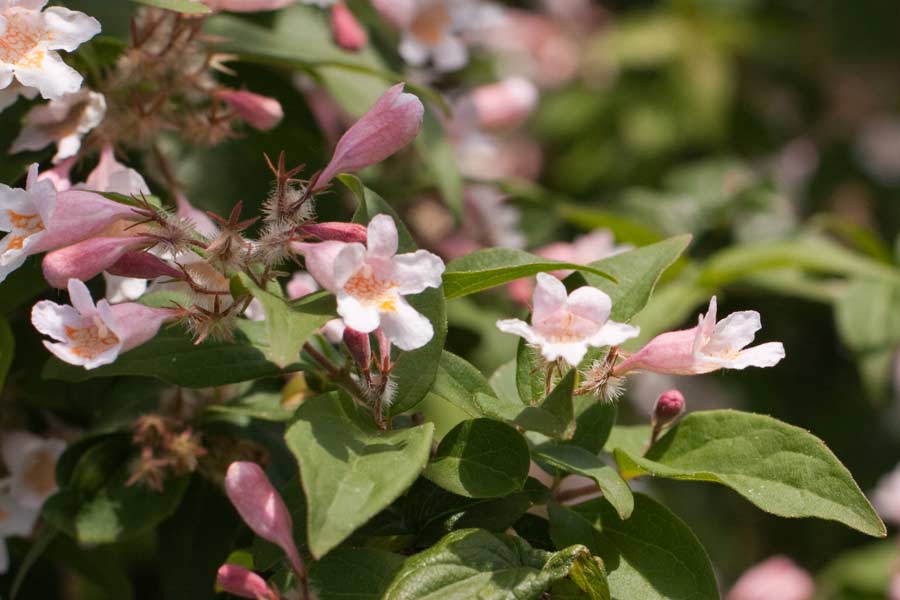
 ake away the must-have multiple offerings of the genus Viburnum, and the mandatory spring bloomers Forsythia and Flowering Quince, and there aren’t many deciduous shrubs worth having in the landscape. There are two specimines, however, that hold off blooming until later in the spring that have merit in a sunny location in a medium to large home landscape.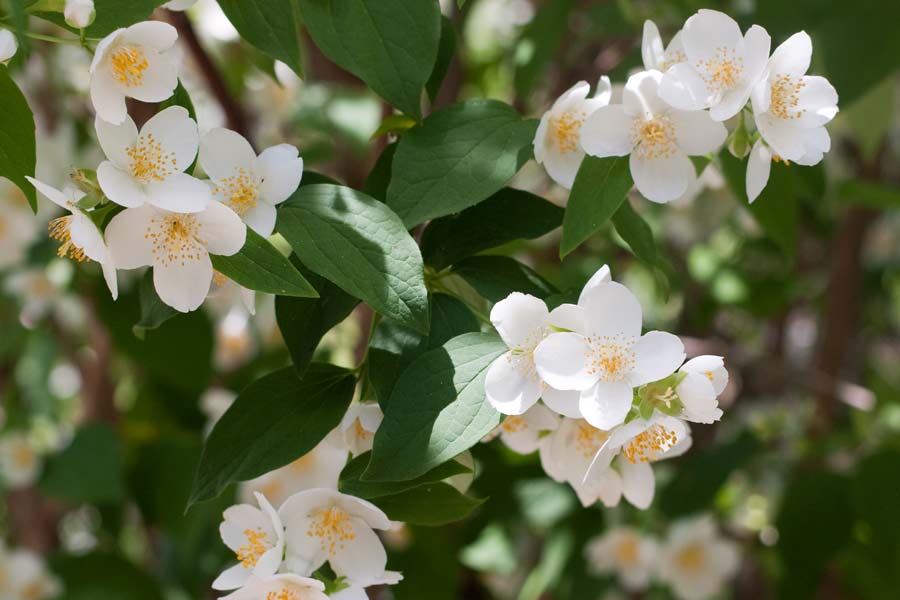
 iversity is good, especially in the landscape. In the church, now, the issue is a bit more complicated. I’m not even going to go there. Let me just put my theological plug in and be done with it. Then we can get back to the landscape.

 round these parts in May, folks are anxious to see the first offerings of the roses in the yard. To fulfill Southern tradition, in honor of their mother, one dons a rose on his or her lapel before going to church on Mother’s Day. If you didn’t have one, a neighbor would gladly let you snip one from his landscape. A red rose signifies that your mother is still living, while a white rose on the lapel means that your mother has “passed on.”
 Under no circumstances would I end that with “go away.” Rain in Oklahoma is a blessing almost always. It has hindered the photography, though. I almost took some shots on Tuesday, which would have been best. Other things pressed in, and that day passed. Since then it has been quite rainy, making a good number of this week’s prospects pretty much unsuitable. This first shot says it all. These Oxalis blooms have not been damaged, they are merely rain-shy. In any case, more blossoms will return all summer long. You can expect to see a number of different Oxalis shots up in the summer months.
 The red buckeye, Aesculus pavia, was what I was hoping to showcase this week, and I will, in spite of the rain. The overall appeal has faded a bit, but this one close-up showed a fair number of blossoms still strutting their stuff. Remember several weeks ago when I mentioned the acronym “MAD Horse?” The Horse part of it refers to the genus Aesculus, sometimes commonly called horse chestnut. Horse refers to strength, or in this case, poisonous. You will recall that the acronym helps you remember four genera. The entire genus Aesculus is one of those four in which the branches are arranged opposite one another. The red buckeye only reaches about fifteen feet in hight, and takes its sweet time to get there. It is a perfect small tree for small yards, if you do not have small children.