uite a few of the blooms I have featured on Fridays recently have been called “lily” but have not been true lilies. Well, today you get the real deal. There are about 90 species in the genus Lilium, probably the most famous among them being the Easter lily, Lilium longiflorum. They typically show up as attractive potted plants around the celebration of the resurrection of Christ. The pure-white blossoms symbolize the spotless Lamb of God as no other can. A native of Japan, it naturally blooms around November. It has to be artifically “forced” to bloom at Easter.
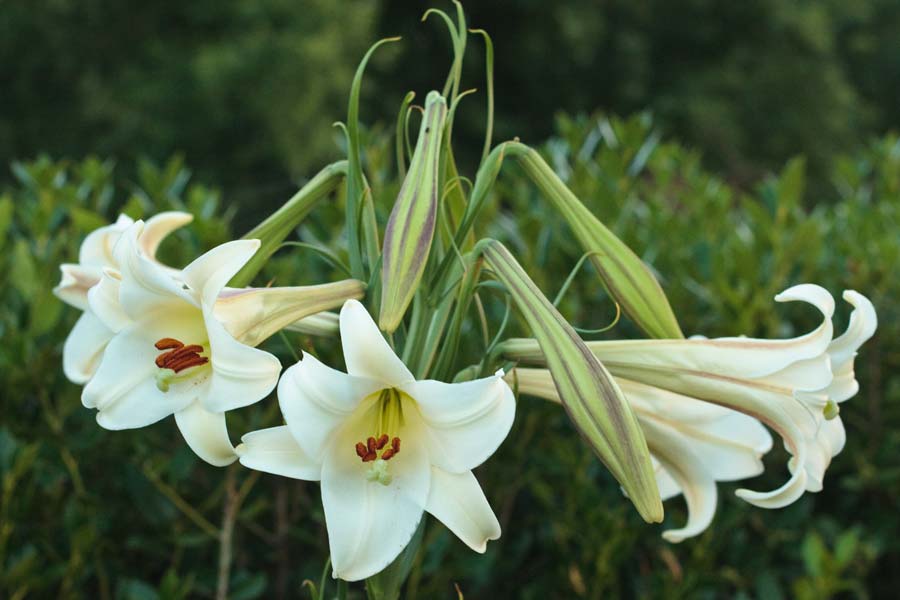
This week’s pic is of a near relative of the Easter lily, the Formosa lily,
Lilium formosanum, a native of, you guessed it, Taiwan. It was introduced to the west in the late nineteenth century. If all you saw was the bloom, you might think it to be that of an Easter lily, except that the trumpet is a bit longer. This is no mere potted plant, however; no escapee from the parlor, growing outside for the summer. This is the
giraffe, the
giant redwood, of the genus
Lilium, in some cases reaching six or seven feet in height. Click on the picture and notice the foliage in the back ground. That is a six-foot holly hedge. Talk about
back of the flower border; this one is made for it. In fact because the plant in bloom is so tall it really needs a fence to grow up against for support in windy areas. Have you ever known Oklahoma
not to be windy? It’s kind of like asking “Is the Pope Catholic?” I’m saying stake it to something if you don’t want to be sad.
Only requiring the afore mentioned support, the Formosa lily is very easy to grow, readily started from seed. If you start the seed early enough in the spring, it usually blooms the first season, an uncommon feat for most perennials. In fact, Formosa lily can become quite a nuisance if you don’t cut and remove the quite attractive seed pods before they split open in the fall, scattering the many seeds everywhere you don’t want them to sprout. In just one year the front of your flower border will look just like the back. Blooming a few weeks in July and August, the Formosa lily is a joy to see. Its Easter lily semblance always reminds me of our Savior.
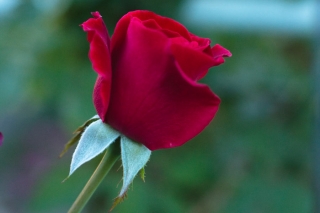
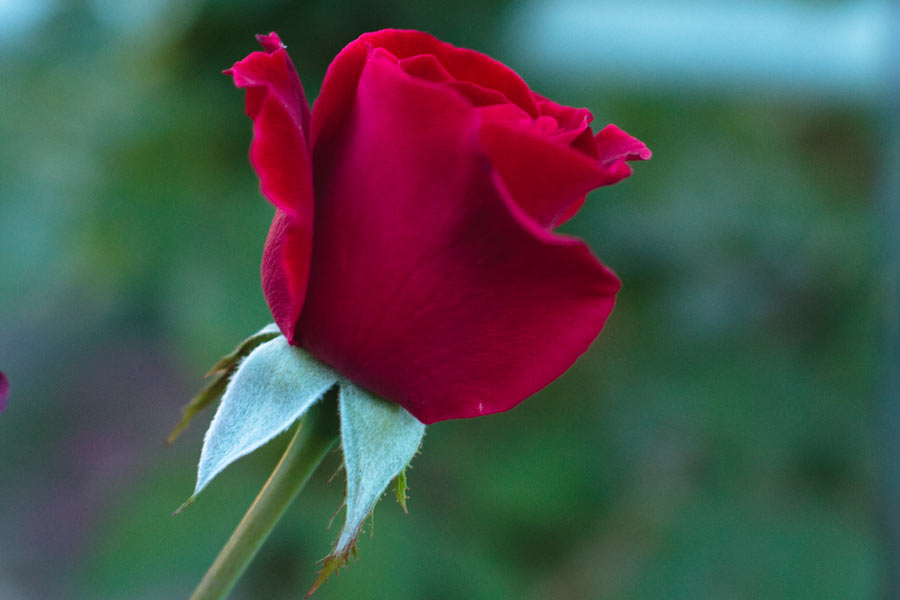
I had to include this shot my wife took of our Don Juan climbing rose. She has fond memories of her grandparents back yard where the same variety of rambling climber engulfed their tool shed. Her grandfather was a avid fisherman, and from time to time he would bury a few fish skeletons at the base of his roses for fertilizer. They were magnificent. When it comes to care, roses are just the opposite of the Formosa lily. They need a fair amount of spraying to keep the bugs and fungi at bay, but it is well worth the trouble.
We had a much-welcomed shower Monday night, into Tuesday, so we will be spending our Saturday out mowing and weed-eating. Hopefully there will be time to enjoy the landscape some too, and rejoice in God’s creation. You get out and enjoy it too, and give thanks. See you Sunday at church.

 et’s
et’s 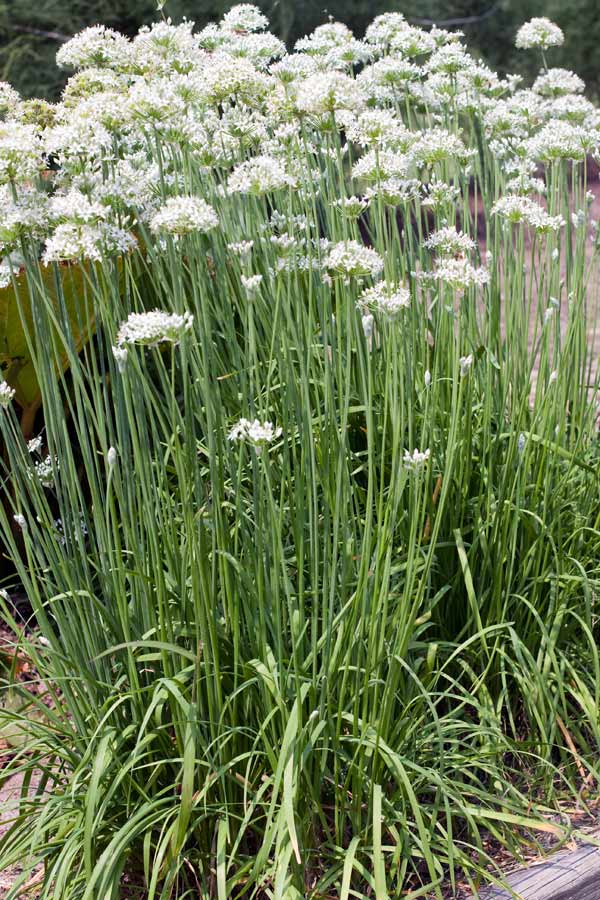
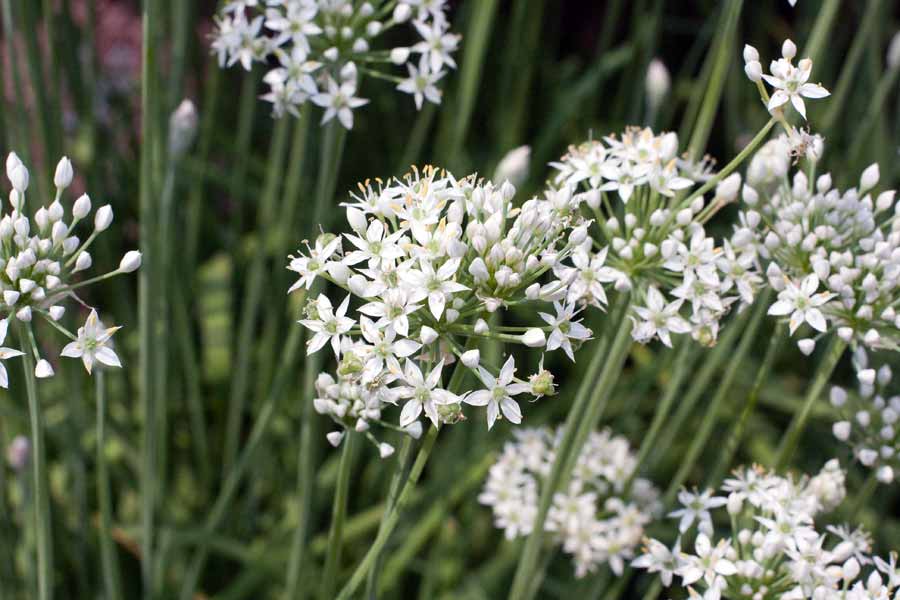
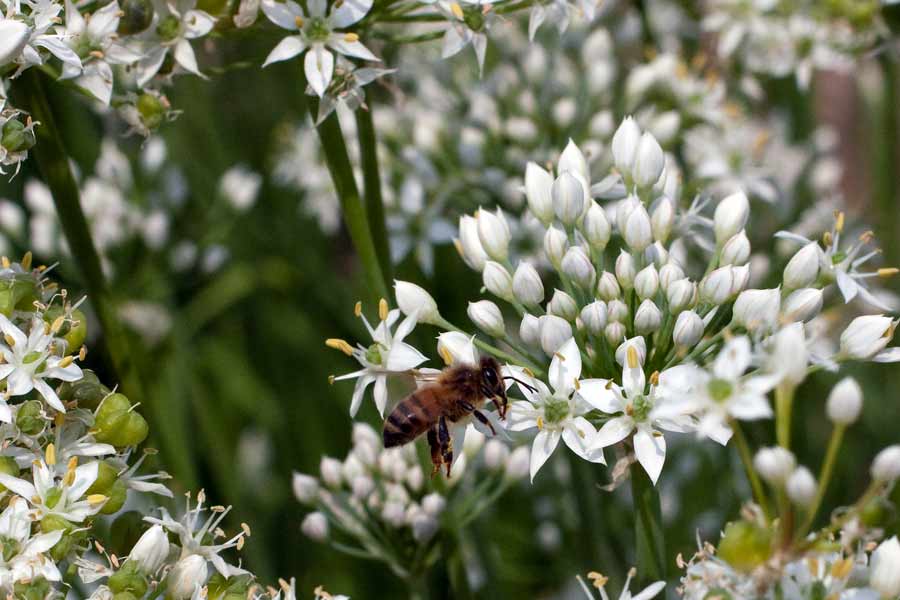
 reamy-white clouds of Autumn clematis have emerged atop many road-side trees in the last few days. They look nice out there, but I wouldn’t want them climbing my trees. They don’t do any real damage, but they look best from a distance, in somebody else’s trees.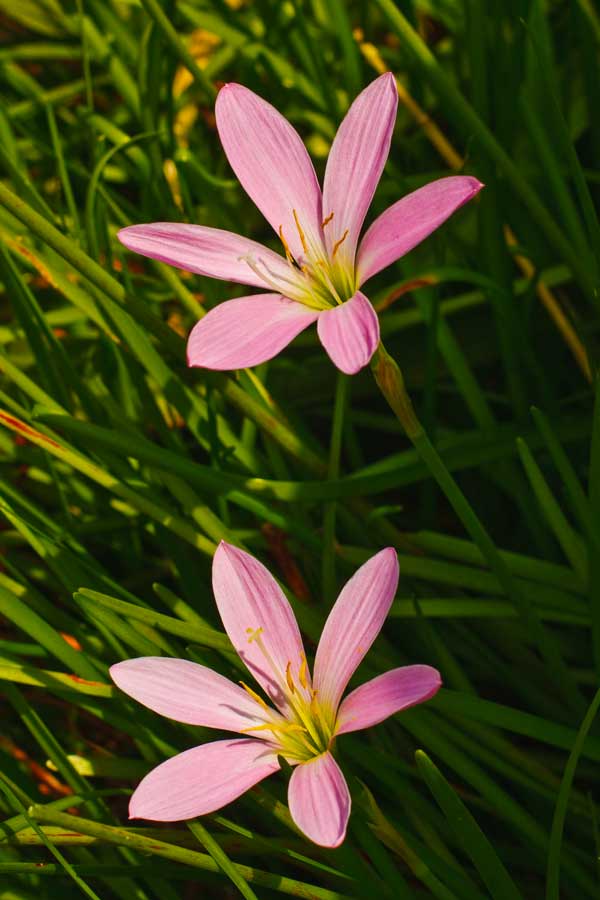
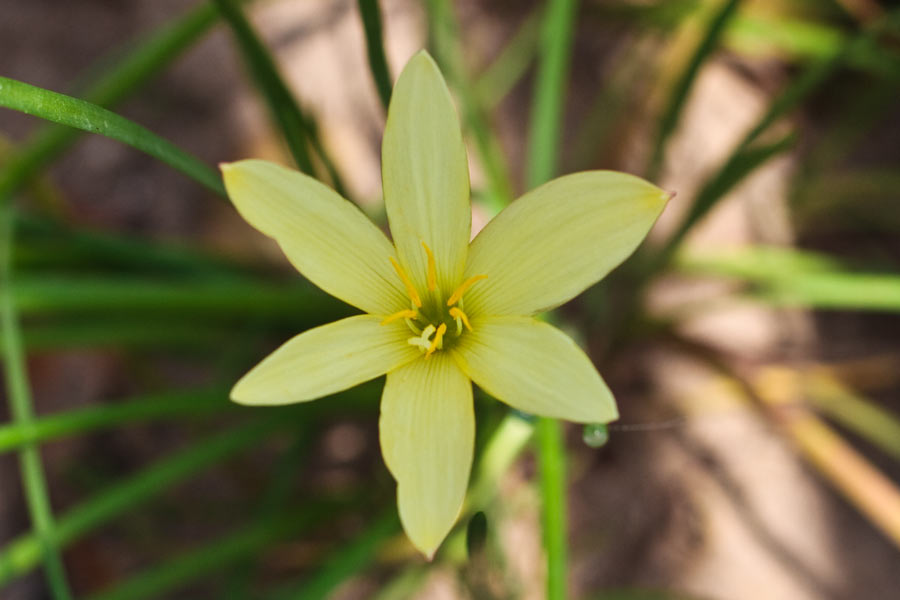
 have never seen rain like this in August. Most years in Oklahoma you need a stick of dynamite to dig a hole in the ground when August rolls around. It has always been a bitter-sweet affair: wishing the drought and humid heat would go away, but realizing that means autumn, and then winter is just around the bend. Not my favorite season, whine-ter. I know that there is still one more week left in this month, but except for a couple of days at the beginning, this has been one of the most pleasant Augusts I can remember.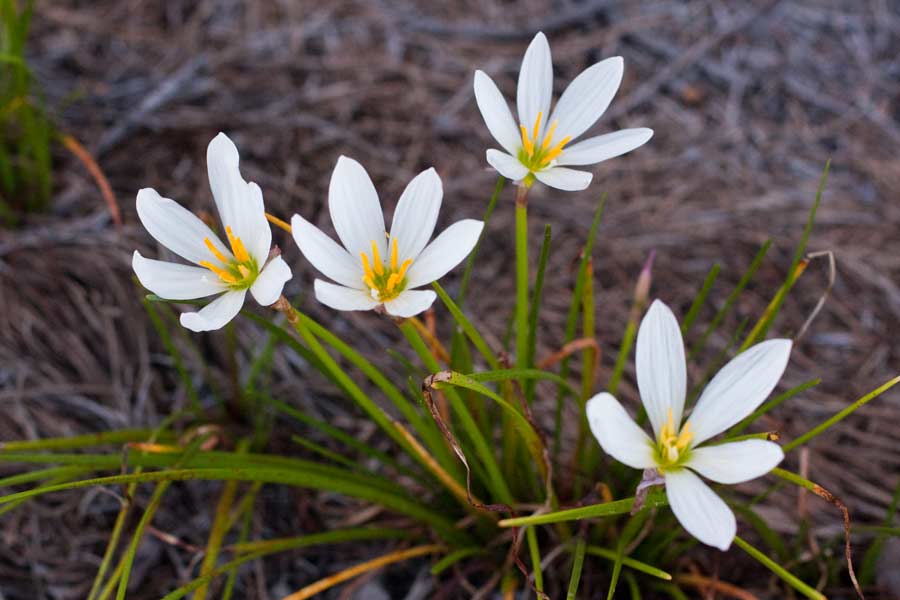
 he hymn Man of Sorrows is atypical of the majority of hymns coming out of that period in American history defined as “revivalism,” that period making up the last half of the 19th century, and confined roughly to the northeastern part of the country. Man of Sorrows is so Christ centered. The Reformers and the Puritans put together couldn’t do much better. The hymn, tune and all, was written by Philip Bliss around 1875. It was one of the last hymns he wrote before he and his wife were tragically killed in a train accident caused by a bridge collapse in December of 1876. He was only 38 years old at the time of his death. I am not typically a huge fan of hymnody from this period, but Man of Sorrows is a bright exception.